
PROFILE
In 1965, I was accepted by St Hilda’s College, initially to study medicine, but quickly changed to Zoology, graduating in 1968 with BA First Class Honours. I also won a Christopher Welch Scholarship, which at the time was one of the few Oxford University research scholarships for which women were eligible. Thus funded, I completed a D.Phil. about insect flight in 1971, supervised by Professor JWS Pringle FRS.
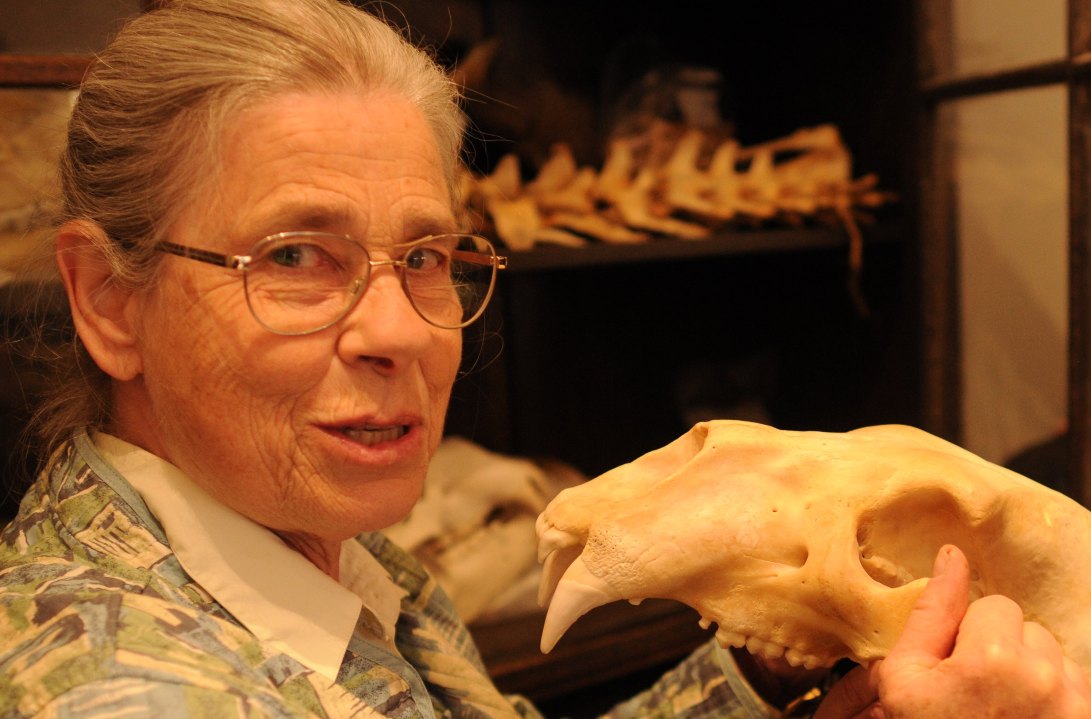
After a few months at Stanford University, I return to Oxford as Demonstrator in Comparative Physiology, Dept. of Zoology and Tutor in Zoology, St. Hilda’s College until emigrating to USA in 1975. There I taught biology for premedical students and veterinary anatomy at the University of Pennsylvania until 1979. From 1979-2010, I worked for The Open University in Milton Keynes mostly writing courses in general biology and physiology. I also investigated natural obesity and comparative anatomy of vertebrate adipose tissue, using road-kills, animals that died naturally or were culled for other purposes, often cleaning the skulls and skeletons of these specimens for permanent storage at home.
In 2016, Professor David Macdonald, whom I had taught when he was an undergraduate, accepted my offer of these specimens, mostly mammals, birds and reptiles, for use in WildCRU teaching and research.
The bequest to Oxford University Biology was arranged with the Oxford University Legacies Team and included £63,000, donated over 2017-19 to fund the rebuilding of a derelict barn at Tubney House into a biological study/meeting room, and valuable hardwood display cabinets.
In 2025, The Pond Collection moved to display cabinets in LaMB Seminar Room 1, where many specimens are organised into 26 ‘boxes’, each themed with an ecologically relevant aspect of functional anatomy, explained in 1-2K words accessible from its QR code. Students, delegates to events in LaMB and the general public can view most of this display from outside the Room and can access the explanatory texts. Other specimens are displayed in the ground floor foyer or stored within SR1 cabinets or in LaMB basement.
The online catalogue lists details of all holdings, their provenance and where they are displayed or stored. The terms of the bequest are that specimens may be used for any approved biological and medical research, including biologically-relevant physical or chemical procedures requiring their defacement or partial destruction. Artists may draw, photograph, trace or scan any item following these rules, but permission will NOT be granted for removal or defacement of specimens for collages, installations or other non-scientific purposes.