
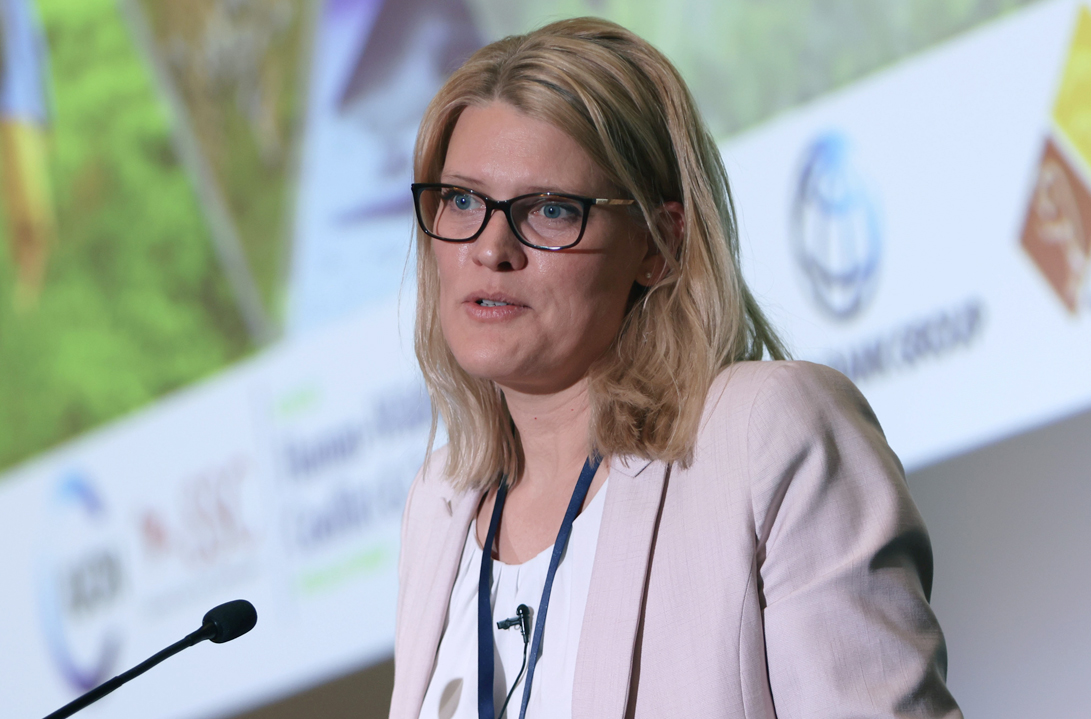
Associate Professor of Wildlife Conservation
Professor Alexandra Zimmermann
Associate Professor of Wildlife Conservation | Chair, IUCN SSC Human-Wildlife Conflict & Coexistence Specialist Group
PROFILE
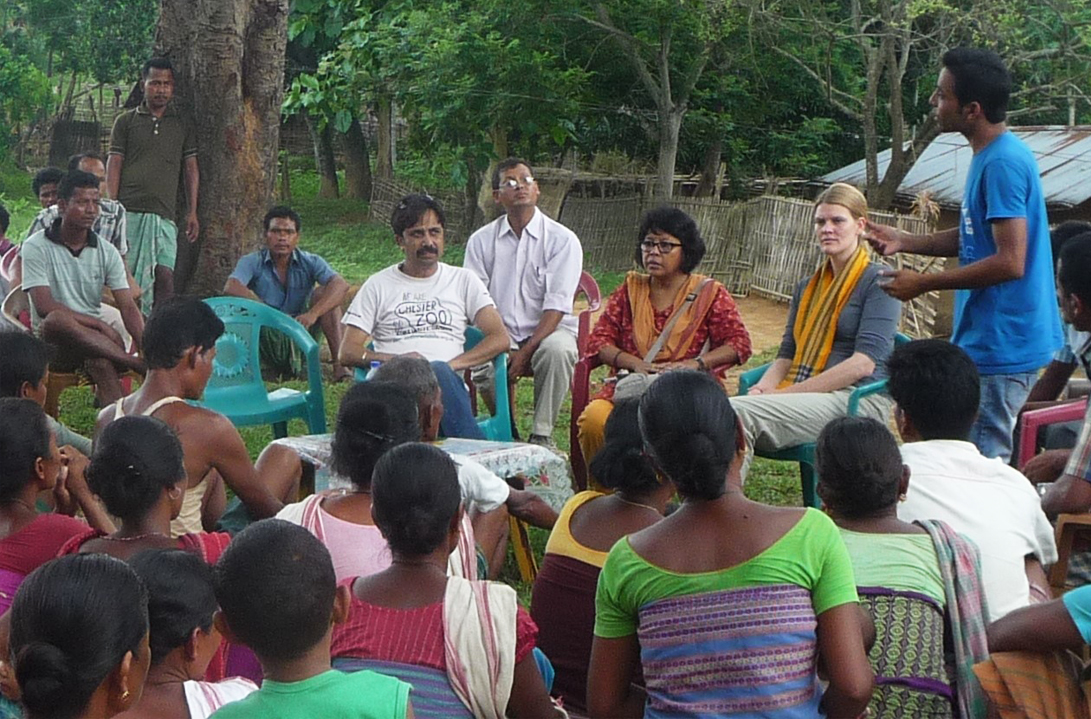
Alexandra Zimmermann is Associate Professor at WildCRU and the founding Chair of the IUCN SSC Human-Wildlife Conflict & Coexistence Specialist Group. She works globally in human-wildlife conflict and coexistence (HWCC) and conservation conflict resolution. Over the past 25 years, she has worked with communities, organisations, and governments across a wide range of situations in Brazil, Venezuela, India, Indonesia, Nepal, Bolivia, Mauritius, Saudi Arabia, the UK, and multinationally.
A key part of her work focuses on building capacity in human-wildlife conflict and conflict resolution. Over the past decade, she has designed and delivered 25 training courses for around 700 conservation practitioners, researchers, and government staff. At WildCRU she leads the development of our forthcoming master’s degree in HWCC as well as a graduate module on HWC at the Department of Geography, and is writing an academic teaching textbook on the topic. This follows her recent book Negotiating Coexistence: The Art and Science of Resolving Conflicts in Conservation (Oxford University Press, 2026) which sets out a practical peacebuilding approach to managing complex human-wildlife conflicts.
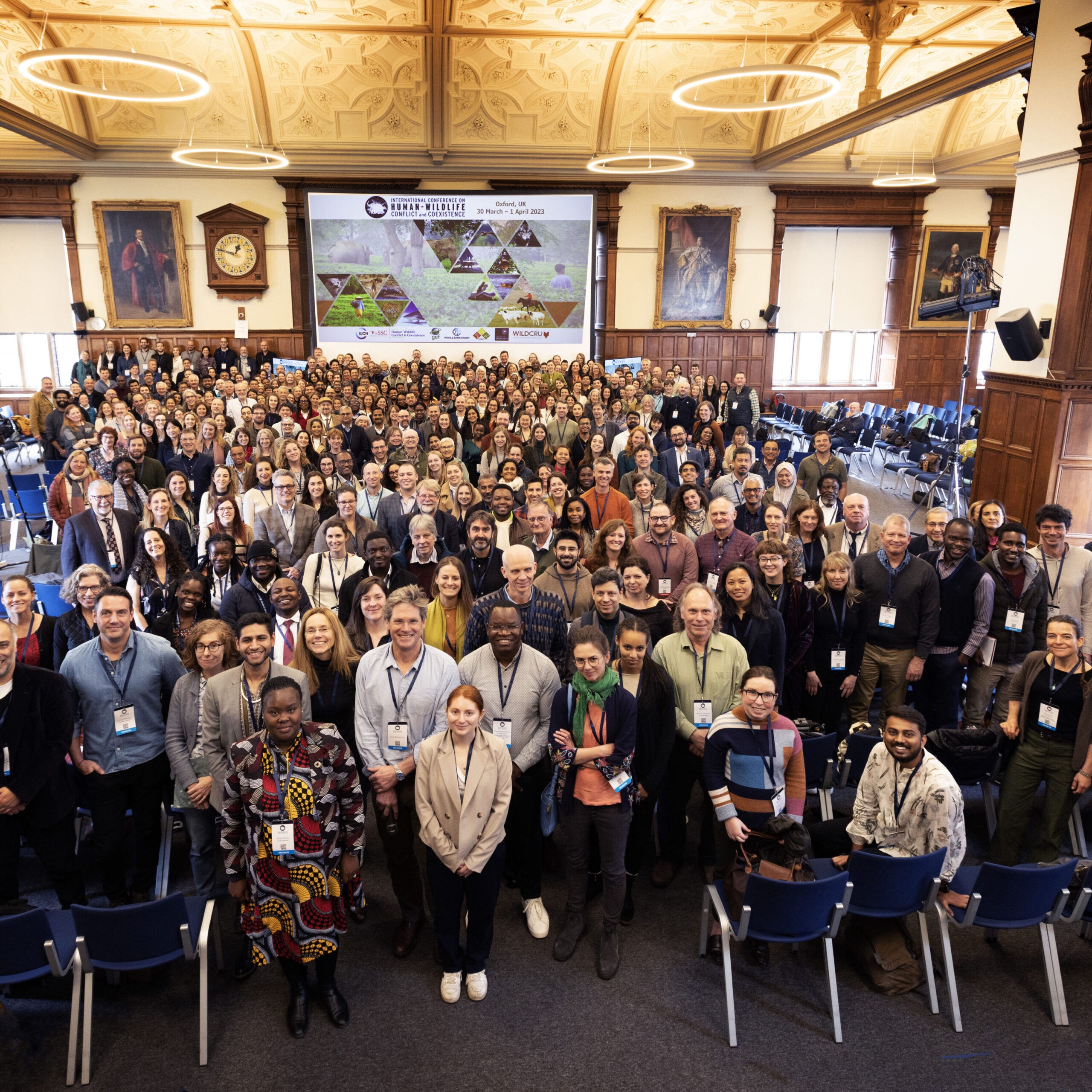
As Chair of the IUCN SSC Human-Wildlife Conflict & Coexistence Specialist Group, Alexandra led the group’s work in developing the IUCN Guidelines on Human-Wildlife Conflict and Coexistence, which has been translated into 10 languages, and established the HWCC International Conferences, the first of which was co-hosted with WildCRU and the World Bank in Oxford in 2023. She plays an active role in international biodiversity policy, particularly in relation to Target 4 of the CBD Kunming-Montreal Global Biodiversity Framework and its implementation and monitoring, facilitating links between policy and practice and fostering cross-sectoral collaboration.
For this science-policy bridging work she received the IUCN Harry Messel Award for Conservation Leadership in 2024 and in 2026 the Midori Prize for Biodiversity from the United Nations and AEON Foundation, for her global work fostering collaboration among researchers, practitioners, and policymakers, helping to establish human-wildlife coexistence as a priority in international biodiversity policy, and advancing the application of approaches from peacebuilding conflict resolution to biodiversity conservation.
Alexandra works extensively in the intergovernmental sector and served for five years as Senior Advisor to the Global Wildlife Program of the World Bank, and later the UN Food and Agriculture Organization. She is a specialist advisor to the Royal Commission for AlUla, serves on the board of the Arabian Leopard Fund, and the UN-led Collaborative Partnership for Wildlife, is a Trustee of Coexistence Story, and a Member of the IUCN Behaviour Change Task Force, IUCN SSC Asian Elephant Specialist Group, an IUCN SSC Cat Specialist Group. Before this, during her 18 years with Chester Zoo, latterly as Head of Conservation Science at Chester Zoo, she won five Darwin Initiative project grants fir community-based human-wildlife coexistence work in South Asia and Latin America.
Alexandra was raised in Indonesia, Lebanon, Germany, France, and Canada. She was initially trained in zoology (BSc, Leeds) and conservation biology (MSc, DICE) before gaining her doctorate in conservation social science (DPhil, Oxford). She later trained in conflict negotiation at Harvard Law School and diplomatic negotiation at the United Nations, and seeks to bring insights from conflict studies, negotiation, and diplomacy into biodiversity conservation.
RESEARCH INTERESTS
I am interested in social, economic and political explorations of conservation conflicts – including but not limited to human-wildlife conflict/coexistence. For prospective doctoral or postdoctoral project collaborations this may include, for example:
- Social psychology, group decision-making, group identities in conservation conflicts
- Polarization, identity, populism and intractable conflict dynamics in conservation
- Media, communications and social media aspects of human-wildlife conflict
- Governance and/or policy aspects of human-wildlife conflict/coexistence
- Development and economic aspects of human-wildlife conflicts/coexistence
- Monitoring methods of socio-economic and governance/policy aspects of human-wildlife conflict/coexistence